

The Democratic Republic of Congo has placed the Rubaya coltan mine—currently under rebel control—on a select list of strategic projects proposed to the United States as part of a new minerals cooperation arrangement, according to a government document reviewed by Reuters.
Rubaya, regarded as one of the world’s most significant sources of tantalum-bearing coltan, was included in materials presented during a bilateral meeting in Washington on February 5 aimed at advancing the minerals partnership agreed upon in December. Both a senior Congolese official and a U.S. diplomatic source confirmed its inclusion, speaking anonymously due to the political sensitivity surrounding the site.
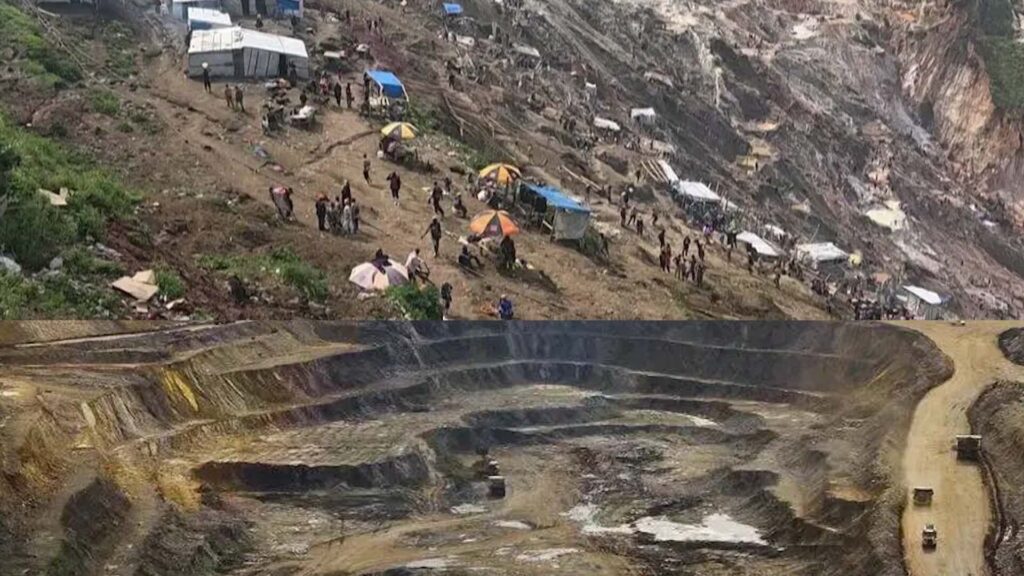
The Rubaya mine in Eastern DRC
Despite being controlled by the Rwandan-backed AFC/M23 rebel group, the mine is now central to Kinshasa’s effort to attract American investment into eastern Congo’s mineral sector, an area long affected by instability. By positioning Rubaya within the proposed cooperation framework, the Congolese government is signalling its intention to formalise and stabilise operations around one of its most valuable natural assets.
Tantalum, extracted from coltan ore, is a highly heat-resistant metal essential to the production of semiconductors, aerospace equipment, mobile devices, computers and gas turbines. With global demand rising sharply—particularly in high-tech manufacturing—the resource has become increasingly strategic.
According to the document, Congolese authorities estimate that between $50 million and $150 million would be required to rehabilitate and scale up commercial production at Rubaya. However, they anticipate that strong international demand for tantalum would allow for a relatively swift return on investment.
For Washington, deeper engagement in Congo’s mineral sector aligns with broader efforts to diversify supply chains and reduce reliance on China, which currently dominates much of Africa’s critical minerals market. Securing access to key deposits such as Rubaya would support U.S. ambitions to strengthen its critical metals reserves while expanding its footprint in a region rich in strategic resources but marked by geopolitical competition.
The inclusion of Rubaya underscores both the economic potential and the complex security realities shaping mineral diplomacy in Central Africa.
Source: Reuters.com
